Rebuilding the Green Machine: How Xbox's Bold Mid-Gen Reinvention Is Winning Back True Believers
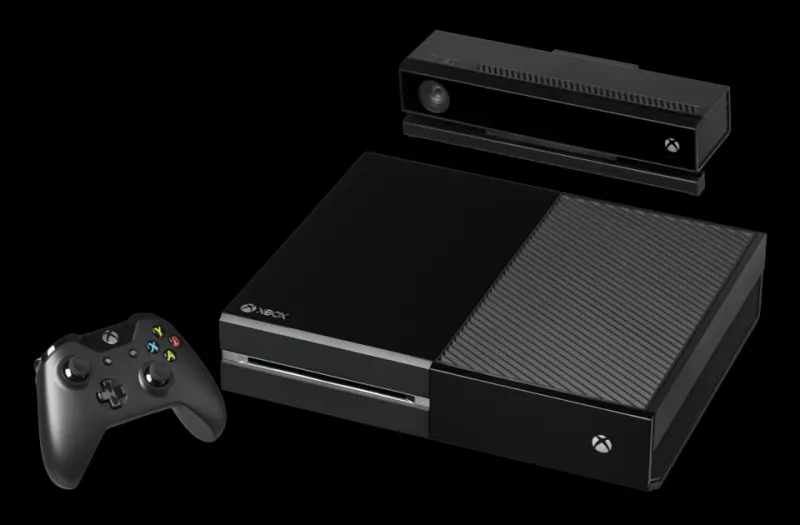
Photo: Removed white background. Original by Evan-Amos., Public domain, via Wikimedia Commons
There's a particular kind of loyalty that only console die-hards understand. It's the kind that keeps you defending your platform at Thanksgiving dinner, refreshing gaming news sites at midnight, and arguing in comment sections long after everyone else has gone to bed. Xbox fans know that loyalty intimately — because they've had to exercise it more than most over the last few years.
But here's the thing: what's happening inside the Xbox ecosystem right now isn't a slow-motion collapse. It's something way more interesting than that. It's a full-blown reinvention, happening in real time, mid-generation, with the whole gaming world watching. And honestly? A lot of us are here for it.
The Old Playbook Is Gone — Good Riddance
For years, the console wars ran on a pretty simple script. You locked down exclusives, you built walls around your platform, and you measured success in units moved. Xbox played that game. Sometimes well, sometimes not so well. But the script has been shredded, and Microsoft isn't pretending otherwise.
The shift to multiplatform releases — putting first-party titles on PlayStation and beyond — felt like a seismic event when it was first announced. Fans freaked out. Forums melted down. Plenty of people declared the Xbox console dead on arrival. But step back from the noise for a second, and what you actually see is a company betting on something bigger than a hardware war. Xbox is betting on itself — on its software, its services, its ecosystem — rather than on the idea that the only way to play its games is to buy a specific box.
That's a fundamentally different philosophy, and it takes some getting used to. But it's not a white flag. It's a pivot.
Studio Acquisitions and What They Actually Mean
Let's talk about the elephant in the room: the acquisitions. Bethesda. Activision Blizzard. A long list of studios that reshaped what Xbox Game Studios looks like on paper. These moves generated enormous headlines, enormous scrutiny, and enormous expectations.
The results have been mixed — nobody's pretending otherwise. Some releases have landed with a thud. Leadership shuffles have followed. Studios have been restructured or, in painful cases, shuttered entirely. For fans who were hyped on the promise of an unstoppable first-party lineup, the reality check stung.
But here's what those acquisitions actually represent beyond the drama: a library. A massive, sprawling library of franchises, engines, and creative talent that Xbox is now figuring out how to deploy. The Fallout TV show exploding in popularity and driving a surge of new players back to the games? That's the ecosystem working. Elder Scrolls content staying relevant years after its last major release? That's brand equity that Xbox now owns and can build on.
The machine is still warming up. And retro fans especially know that patience with a platform — real, stubborn patience — is what separates the casual observer from the true believer.
Phil Spencer, Mat Piscatella, and the Question of Vision
Leadership transitions are always uncomfortable. When the faces associated with a brand's direction start shifting, it creates uncertainty. Xbox has navigated some real turbulence at the executive level, and the gaming press has covered every development with the intensity of a political news cycle.
What's interesting, though, is how the community has responded. Rather than fracturing entirely, a significant chunk of the Xbox faithful have doubled down. Xbox-specific content creators, fan communities on Reddit and Discord, and dedicated sites like this one have kept the conversation going — not just defending the brand, but genuinely engaging with what it could become.
That's the culture part of Xbox culture, and it's more resilient than the quarterly reports suggest.
Accessibility, Game Pass, and Redefining What 'Xbox' Even Means
If you ask someone in 2024 what 'being an Xbox person' means, you're going to get a wildly different answer than you would have gotten in 2005 or even 2015. And that's actually kind of fascinating.
Game Pass has rewired how a huge portion of the player base interacts with games. Instead of the old model — save up, buy the disc, finish it, trade it in — you've got a subscription that lets you dive into a massive catalog with minimal commitment. For retro-minded gamers especially, the ability to hop between decades of gaming history on a whim is genuinely remarkable. One night you're in a backwards-compatible classic from the original Xbox era; the next you're in a day-one release.
The accessibility angle goes beyond Game Pass too. Xbox's commitment to adaptive controllers and inclusive design has quietly built real goodwill in communities that other platforms have largely ignored. That's not marketing fluff — it's a tangible expression of what the brand is choosing to stand for.
Being 'Xbox' in 2024 means being part of an ecosystem that prioritizes options. Play on console, play on PC, play on your phone through cloud gaming. The hardware matters less than it ever has. For some fans, that's a loss. But for many others, it's freedom.
Why the Chaos Actually Makes Sense
Here's the honest take: what looks like chaos from the outside is actually the growing pains of a company attempting something genuinely ambitious. Microsoft is trying to transition Xbox from a console brand into a gaming platform in the broadest possible sense — one that doesn't live or die by the fortunes of a single piece of hardware.
That transition is messy. It's going to produce missteps, confusing messaging, and plenty of moments that make even the most loyal fan squint at the screen wondering what exactly is going on. That's just what reinvention looks like from the inside.
For those of us who've been riding with Xbox since the original big black box with the enormous Duke controller, there's something almost familiar about this moment. Xbox has always been the scrappy underdog trying to prove it belongs at the table — first against PlayStation's dominance, then against Nintendo's cultural lock, and now against the very idea of platform exclusivity as a business model.
The brand has never been about playing it safe. It's always been about swinging big and seeing what sticks.
The Fans Who Stayed
If there's one thing this mid-generation reinvention has made crystal clear, it's who the real Xbox community actually is. Not the people who bail when the exclusive lineup disappoints. Not the platform warriors who only show up to dunk on rival fandoms. The real community is the one that stays curious, stays engaged, and keeps asking what comes next — even when the answers are complicated.
That's the community worth being part of. And frankly, it's the community that Xbox needs to keep earning.
The green machine is being rebuilt in real time. It's louder and messier than most console evolutions. But if you're the kind of fan who grew up appreciating what Xbox represented at its best — ambition, innovation, and a refusal to just accept the status quo — then this moment, chaotic as it is, feels like exactly the right time to be paying attention.
We're reloaded. Let's see where this goes.