All You Can Play: How Game Pass Rewired What It Means to Be an Xbox Fan
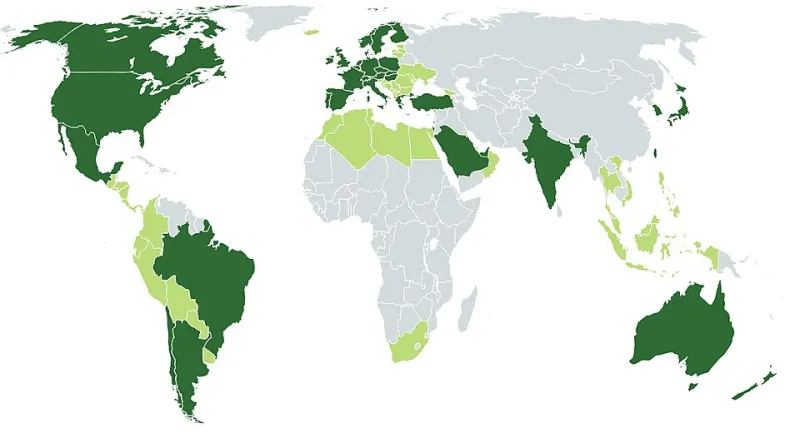
Photo: map made using Mapchart.net GonzalezRio, CC BY-SA 4.0, via Wikimedia Commons
There's a moment a lot of Xbox players remember pretty clearly. You're scrolling through Game Pass, coffee in hand, and you realize you've got more games queued up than you could realistically finish in a year. Maybe two years. And somewhere in that scroll, something shifts. You stop thinking like a consumer making careful purchase decisions and start thinking like a subscriber hunting for the next great thing to sample. That mental switch — quiet, gradual, almost invisible — is exactly what Microsoft was betting on.
Game Pass launched in 2017 with roughly 100 titles and a whole lot of skepticism. Industry analysts weren't sure if the "Netflix for games" pitch would land. Plenty of gamers thought it sounded too good to be true. Fast forward to 2024, and the service sits at over 25 million subscribers, with Microsoft committing first-party day-one releases straight to the library as standard practice. The question isn't whether Game Pass worked. The question is what it actually did to Xbox culture — and whether all of it was good.
From Optional Perk to Center of Gravity
In the early days, Game Pass felt supplemental. You had your must-buys, the games you'd pre-order and pay full price for without blinking, and then Game Pass was this bonus drawer you'd rifle through when nothing else was calling. Titles like Forza Horizon 4 and Sea of Thieves were already solid reasons to own an Xbox, and the subscription was just extra.
Then Microsoft started doing something genuinely bold: dropping their own first-party titles into the service on launch day. Halo Infinite. Forza Horizon 5. Starfield. Suddenly, the calculus changed. If you were already a Game Pass subscriber — and by 2021, a lot of Xbox owners were — you weren't just getting a library of older games. You were getting the biggest Xbox releases of the year for the price of a monthly fee you were probably already paying.
For a lot of players, that moment crystallized Game Pass from a nice-to-have into a non-negotiable. Why buy a $70 game when you're already subscribed to a service that drops it for free on day one? The logic is almost uncomfortably simple.
The Subscription Wars Nobody Asked For
Of course, Xbox didn't build this in a vacuum. The broader gaming industry was already moving toward subscription models — PlayStation Now (now PS Plus Extra), EA Play, Ubisoft+, Apple Arcade — and the competition was real. But Game Pass differentiated itself through sheer scale and, crucially, through Microsoft's willingness to absorb short-term losses for long-term ecosystem lock-in.
Buying Bethesda for $7.5 billion and then funneling their entire catalog into Game Pass wasn't just a content play. It was a statement: we are building a platform, not just a console. When the Activision Blizzard deal closed in 2023, adding franchises like Call of Duty, Diablo, and World of Warcraft to the mix, the service stopped looking like a subscription and started looking like infrastructure.
That's a meaningful distinction. Infrastructure is what you build your habits around. And habits, in gaming as in most of life, are incredibly sticky.
What the Community Actually Thinks
Spend any time in Xbox-focused forums or subreddits and you'll find the Game Pass conversation is more complicated than the marketing suggests. There's genuine enthusiasm — players who credit the service with broadening their tastes, pushing them toward indie titles or genres they'd never have paid full price to try. Hades, Outriders, The Forgotten City — games that became community favorites partly because the zero-friction entry point let people take a chance.
But there's friction too. Some longtime Xbox fans feel the subscription model has subtly devalued games. When everything is available for a flat monthly fee, does any single title feel truly special? A few community members have pointed out that they now play games more shallowly — dabbling in something for a few hours before moving on — because the opportunity cost of sticking with one game feels higher when there are hundreds of others sitting right there.
There's also the question of what happens when games leave the library. Unlike buying a disc or a digital title outright, your access to a Game Pass game is contingent on your subscription staying active and the game staying on the service. Titles rotate out. That impermanence bothers some players in a way that's hard to shake, especially for a community that grew up on cartridges and discs they could keep forever.
The Retro Wrinkle
Here's something that doesn't get talked about enough: Game Pass has actually been a quiet win for gaming history. The service has introduced younger players to classic titles through Xbox's backward compatibility program, bundling legacy games into a library that spans decades. You can hop from Starfield to Psychonauts to something from the original Xbox era without leaving the ecosystem.
For a site like ours, that matters. The preservation instinct — the idea that gaming's past deserves to live alongside its present — is something Game Pass, whatever its flaws, has genuinely supported. When Microsoft adds an older title to the catalog, they're making a bet that someone out there wants to play it. And more often than not, someone does.
The Risk Underneath the Revolution
None of this is without risk, and Microsoft knows it. The sustainability of a model that front-loads massive content investment against monthly subscription revenue is dependent on subscriber growth continuing at pace. If that growth plateaus — and there are signs it's slowing — the math gets harder. Developers who once celebrated Game Pass as a discovery engine have quietly raised concerns about whether streaming and subscription exposure actually translates into the kind of revenue that sustains long-term studios.
The acquisition of major publishers helped paper over some of those concerns by keeping content costs internal, but it also raised antitrust eyebrows across the industry. The FTC's challenge to the Activision deal, even though it ultimately failed, was a signal that regulators are watching how gaming's subscription wars reshape market competition.
What It Means to Be an Xbox Loyalist in 2024
Being an Xbox fan in 2024 looks different than it did in 2005 or even 2015. The console itself is almost secondary — Xbox is increasingly a service, a brand, an ecosystem that spans PC, cloud, and living room. Game Pass is the connective tissue holding all of that together.
For the dedicated community that's been riding with Xbox through the good years and the rough patches, that evolution is bittersweet in some ways. The scrappy underdog energy of the original Xbox era, the pure console-wars tribalism of the 360 days — that's harder to locate in a world where Xbox is a subscription platform with 25 million users and a catalog that could keep you busy until retirement.
But maybe that's okay. Gaming grows up. Communities evolve. And if Game Pass means more people are playing more games — including some classics they'd never have discovered otherwise — that's a version of Xbox culture worth being part of.
Even if your queue is way too long and you still haven't finished Hades.