Xbox at the Crossroads: Why the Green Team's Identity Struggle Is Really Gaming's Struggle
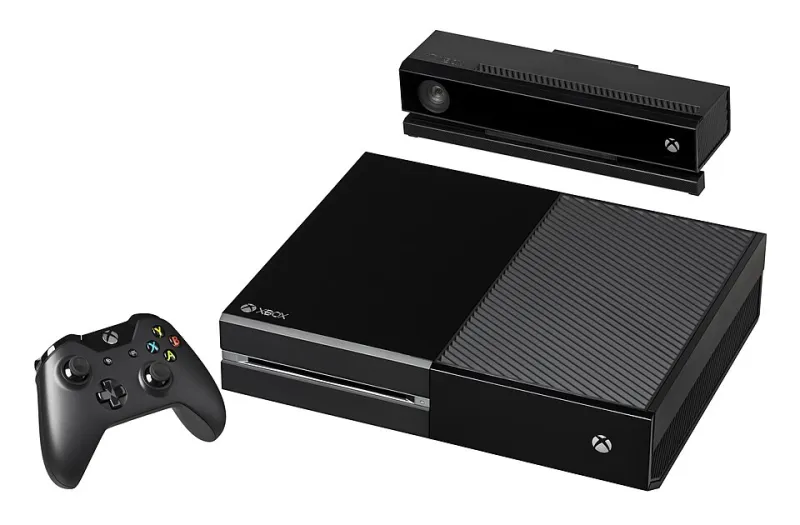
Photo: Evan-Amos, Public domain, via Wikimedia Commons
Let's be honest with each other for a second. If you asked ten different Xbox fans what Xbox is right now — not what it sells, not what it costs, but what it fundamentally stands for — you'd probably get ten different answers. Some would say it's the home of Game Pass, the Netflix of gaming. Others would tell you it's a PC in a box. A few old-school types might still cling to the Halo-and-Gears era like a comfort blanket. And honestly? All of them would be at least partially right.
That's not a knock on Xbox. It's actually one of the most fascinating things happening in gaming culture right now. Because the identity crisis playing out inside Microsoft's gaming division isn't happening in a vacuum — it's a direct reflection of the biggest philosophical arguments the gaming community has been having for years. Who gets to call themselves a gamer? What makes a platform worth owning? Does exclusivity protect gaming culture or suffocate it?
Xbox, whether it meant to or not, has become the battleground where all of these questions get fought out in real time.
The Exclusivity Paradox
There was a time — not even that long ago — when the console wars were simple. You picked a side, you defended your exclusives like they were your firstborn children, and you dunked on the other guy's library at every opportunity. Xbox had Halo. PlayStation had God of War. Nintendo had Mario. The lines were clean.
Then Xbox started putting its games on PC. Then Game Pass launched and suddenly day-one exclusives were available for a monthly fee. Then Xbox games started showing up on PlayStation. The whole fortress-wall model crumbled, and a certain kind of fan felt genuinely betrayed.
But here's the thing — was that betrayal justified, or was it nostalgia doing the talking? The "exclusives define a platform" argument only works if you believe gaming is fundamentally a tribal exercise. And for a lot of us who grew up in the cartridge era, it kind of was. You were a Nintendo kid or a Sega kid. There was no in-between. That identity ran deep.
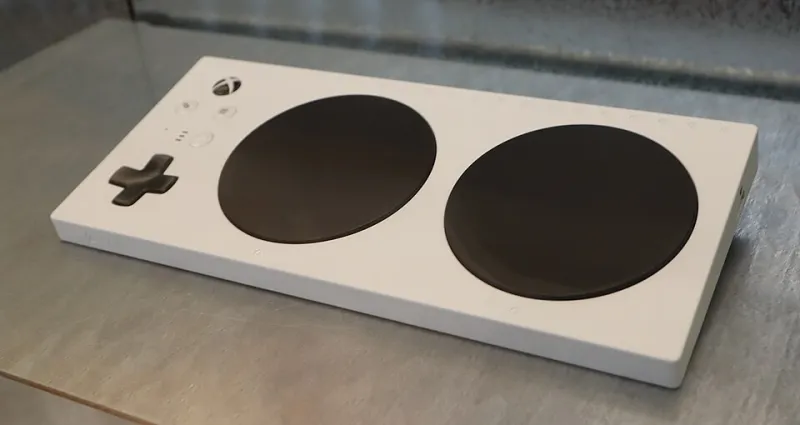
Xbox's move toward accessibility — toward the idea that your games should follow you rather than being locked to a piece of hardware — challenges that tribalism at its core. And that's uncomfortable, even for people who intellectually agree with the philosophy.
Game Pass: Liberation or Dilution?
Game Pass is arguably the most disruptive thing to happen to console gaming since online multiplayer. The value proposition is genuinely hard to argue with. Hundreds of games, including day-one first-party releases, for somewhere in the neighborhood of what you'd pay for a single new title every couple of months. For casual players, for families, for people who want to sample widely rather than commit deeply, it's a revelation.
But spend enough time in gaming communities — Reddit threads, Discord servers, the comment sections of sites like this one — and you'll find a persistent counter-argument. The worry is that Game Pass changes the relationship between players and games. When everything is available, does anything feel special? When you're not spending $70 on a title, do you invest in it the same way?
This isn't a crazy concern. There's real psychology behind it. The sunk-cost effect is real. People finish games they paid full price for at rates that dwarf their completion rates on subscription titles. Whether that's better or just different is genuinely debatable.
What's interesting is that this debate maps almost perfectly onto broader cultural arguments about streaming, ownership, and what it means to have a relationship with media. Xbox didn't invent these tensions — it just put a controller in their hands.
The "Play Anywhere" Philosophy and What It Costs
Microsoft's Play Anywhere initiative was, on paper, a consumer-friendly dream. Buy a game once, play it on Xbox or PC, carry your saves between platforms, no double-dipping required. For a certain type of gamer — the one with a gaming PC under the desk and a console under the TV — it was genuinely great news.
But it also quietly eroded one of the core reasons people buy a dedicated console in the first place. If the Xbox experience is fully replicable on a PC, what exactly are you buying when you buy an Xbox? The answer Microsoft would give you is convenience, simplicity, the couch experience. And those are real things! But they're harder to get excited about than a library of games you can't play anywhere else.
This is the tension that sits at the heart of Xbox's identity problem. The platform has optimized so hard for flexibility and access that it's sometimes hard to articulate what makes it irreplaceable. And in a market where PlayStation is still leaning hard into the prestige exclusive model, that gap feels significant to a lot of fans.
The Console Wars Mentality Isn't Dead — It Just Evolved
Here's what's funny, though. Despite everything — despite cross-platform releases, despite Game Pass, despite Xbox games showing up on rival hardware — the console wars mentality is absolutely still alive. It just looks different now.
Instead of "my exclusives are better than yours," the argument has shifted to "my ecosystem is smarter than yours." Xbox fans point to Game Pass value and backward compatibility. PlayStation fans point to exclusive quality and first-party prestige. The tribalism didn't go away; it just found new vocabulary.
And in a weird way, that's kind of comforting? It suggests that the passion people have for their platforms of choice isn't really about the hardware or even the games — it's about identity and community. People want to belong to something. They want their choices to mean something.
Xbox's challenge is convincing its community that the thing they belong to still has a clear, coherent shape. That's not a marketing problem — it's a cultural one.
What It All Actually Means
Look, none of this is meant to be a hit piece on Xbox. If anything, the opposite is true. The questions Xbox is wrestling with — about ownership, access, exclusivity, and what a platform owes its community — are the most interesting questions in gaming right now. They don't have easy answers.
What we know is this: the gaming community has never been more fractured in its definition of what gaming should be, and Xbox has somehow managed to plant a flag in nearly every camp simultaneously. That's either visionary or confused, depending on who you ask and on which day.
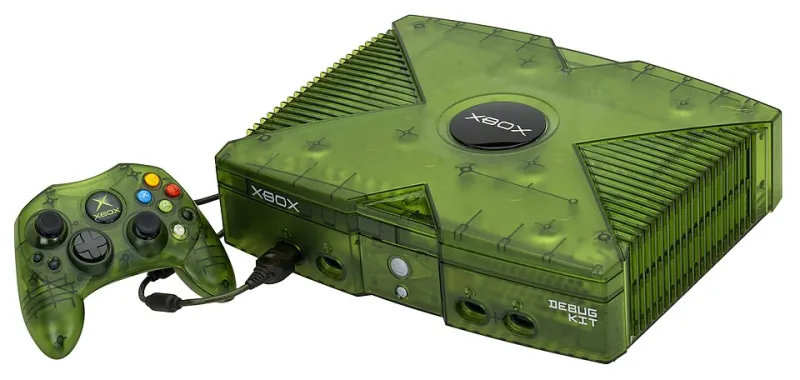
For those of us who've been along for the ride since the original big black box showed up under the Christmas tree, there's something almost poetic about it. Xbox has always been the scrappy challenger, the underdog with something to prove. Maybe the identity crisis is just the next chapter in that story — a platform still figuring out what it wants to be when it grows up.
And honestly? We're here for it. The debate is part of the fun.