Gone But Not Forgotten: The Xbox Exclusives That Jumped Ship and What That Means for Die-Hards
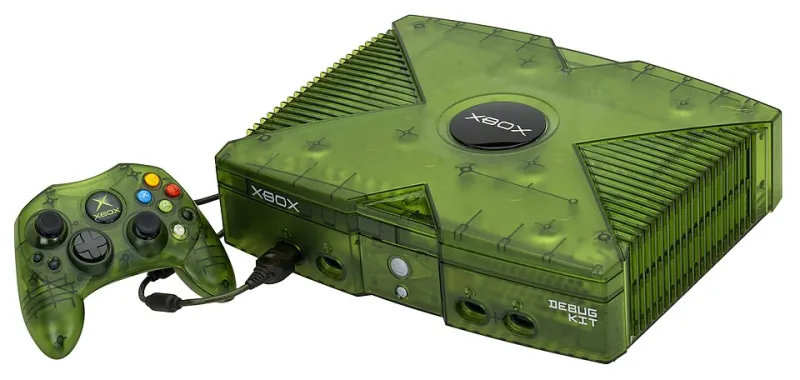
Photo: Evan-Amos, CC BY-SA 3.0, via Wikimedia Commons
There's a particular kind of sting that Xbox loyalists know all too well. You boot up a franchise you've championed for years — maybe you evangelized it to your friends, maybe you built your gaming identity around it — and then one day you read a headline that it's coming to PlayStation or Nintendo Switch. Or worse, it's just... gone. No sequel. No spiritual successor. Nothing.
The history of Xbox is partly a history of franchises that got away. Some were sold off. Some studios shuttered. Some games that once wore the Xbox badge proudly ended up on every platform imaginable. And while there are real business reasons behind every one of these decisions, that doesn't make it any easier for the fans who stayed loyal through thick and thin.
Let's dig into it.
The Early Days: When Xbox Had Something to Prove
Back in 2001, Microsoft entered the console wars swinging. The original Xbox launched with a chip on its shoulder and a handful of exclusives designed to make a statement. Halo: Combat Evolved was the obvious headliner, but the platform also built its identity around titles like Project Gotham Racing, Crimson Skies, and Rallisport Challenge — games that felt distinctly Xbox in their personality.
For a while, that identity held. The Xbox 360 era might be the golden age of Microsoft exclusives, with franchises like Gears of War, Fable, and Crackdown giving the platform a genuine personality that rivaled Sony's first-party lineup. These weren't just games — they were reasons to own an Xbox.
So what happened?
The Slow Drift: Multiplatform Creep
It didn't happen overnight, but somewhere in the mid-2010s, the ground started shifting. Microsoft began pulling back from first-party development in ways that, at the time, seemed like strategic pivots but in hindsight look more like miscalculations.
Fable went quiet after Fable III underwhelmed in 2010. Project Gotham Racing was quietly shelved after Bizarre Creations — the studio behind it — was acquired by Activision and eventually shut down in 2011. Crackdown limped through a troubled third entry. Phantom Dust got a remaster nobody asked for instead of a proper sequel.
Some of these weren't exactly "leaving" Xbox so much as they were dying on the vine. But the effect on fans was the same: the platform felt like it was losing its personality piece by piece.
Then there were the more dramatic departures. Minecraft, after Microsoft acquired Mojang in 2014 for $2.5 billion, remained fully multiplatform — a deliberate choice, but one that meant Xbox's biggest game wasn't actually an Xbox game in any exclusive sense. Cuphead, developed by Studio MDHR with early Xbox support, eventually made its way to Nintendo Switch and PlayStation. Even Ori and the Blind Forest, one of the most visually stunning indie darlings in Xbox's catalog, eventually landed on Switch.
The Big Pivot: When Microsoft Started Playing a Different Game
To be fair to Microsoft, their strategy has evolved considerably. The Xbox Game Pass model changed the conversation entirely. Rather than competing title-for-title with Sony's first-party machine, Microsoft bet on value — a subscription library that makes the argument for the ecosystem rather than any single game.
That's a legitimate business strategy. But for fans who grew up with the idea that exclusives were the currency of console wars, it feels like a concession.
The Bethesda acquisition in 2021 — the $7.5 billion deal that brought Elder Scrolls, Fallout, Doom, and Starfield under the Xbox umbrella — looked like Microsoft finally going on offense. But even that has been complicated. Starfield launched as an Xbox and PC exclusive, but Fallout remains multiplatform, and the long-term exclusivity strategy for Bethesda's catalog has been murky at best.
More recently, Microsoft made waves by announcing that several previously Xbox-exclusive titles — including Hi-Fi Rush, Pentiment, Grounded, and Sea of Thieves — would be coming to PlayStation 4 and 5. For a lot of Xbox die-hards, that felt like a line being crossed. These weren't legacy titles from a decade ago. Hi-Fi Rush had just launched in January 2023 to massive critical acclaim. Its multiplatform announcement, less than a year later, genuinely blindsided people.
What Loyal Fans Actually Feel
Browse any Xbox subreddit or gaming forum after one of these announcements and you'll find the full spectrum of reactions. Some fans are philosophical about it — "more people get to enjoy great games, that's a good thing." Others feel genuinely betrayed, like the implicit contract of platform loyalty has been broken.
And honestly? Both reactions make sense.
Gaming communities form around shared experiences. Part of what made the 360 era feel special was that Gears of War was yours if you had an Xbox. It created a sense of belonging, of having picked the right team. When that exclusivity dissolves, so does a little bit of the identity that came with it.
For older Xbox fans especially — the ones who were there for Halo 2 midnight launches and four-player Halo 3 co-op — watching the platform's exclusive catalog thin out carries a kind of nostalgia-tinged grief. The Xbox they fell in love with had a distinct voice. That voice has gotten harder to hear.
What This Means Going Forward
Here's the honest truth: the traditional exclusive model is under real pressure across the entire industry, not just at Xbox. Games are more expensive to make, player bases are fragmented, and subscription services are changing what "ownership" of a platform even means.
Microsoft has made it clear that their vision for Xbox is less about a box you buy and more about a service you subscribe to — one that works on consoles, PC, phones, and eventually smart TVs. In that world, the concept of a game being "Xbox exclusive" becomes almost philosophical.
That might be the future. But futures can be mourned even while you accept them.
For the loyalists who've been riding with Xbox since the Duke controller days, the loss of exclusives isn't just a business story — it's a cultural one. Those games were part of what made the platform feel like home. And no matter how good Game Pass gets, home is hard to replicate.
The franchises that left took a little piece of Xbox culture with them. The ones that stayed — and the new ones still being built — carry the weight of that legacy. Here's hoping they're up to it.