Playing the Past: How Xbox Turned Backwards Compatibility Into a Love Letter to Gaming History
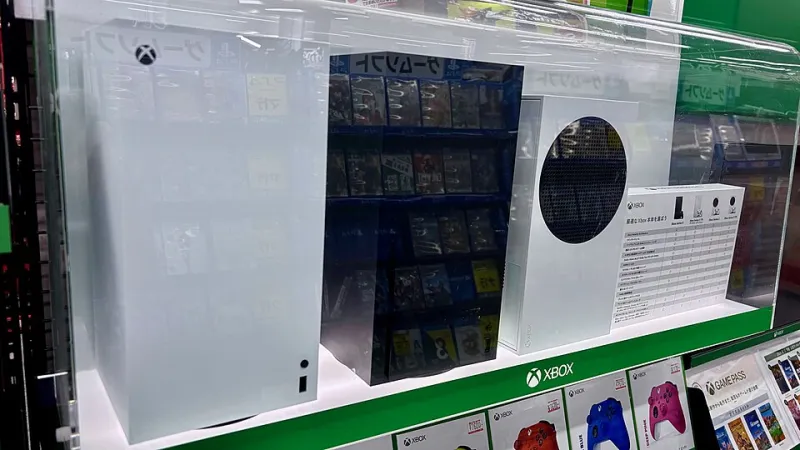
Photo: Kyu3a, CC BY-SA 4.0, via Wikimedia Commons
There's something almost magical about booting up an original Xbox disc on a Series X. The loading screens look sharper, the frame rates behave themselves, and yet the soul of the game — the thing that made you fall in love with it back in 2003 — is completely intact. That's not a small thing. That's actually kind of remarkable.
Microsoft's backwards compatibility initiative, which kicked into high gear around 2015 and has since grown into one of the most ambitious preservation efforts in gaming, didn't happen by accident. It took years of engineering work, tricky licensing negotiations, and a genuine philosophical commitment from the Xbox team to make it real. And for a community of gamers who grew up with the original big black box sitting under their TVs, it means everything.
The Moment Everything Changed
Cast your mind back to E3 2015. Xbox head Phil Spencer walked out and casually announced that the Xbox One would support Xbox 360 games — for free, if you already owned them. The crowd went nuts, and honestly, the reaction made sense. Sony had been charging PlayStation 3 owners to stream their old games through PlayStation Now, and Nintendo had its Virtual Console with its own separate pricing structure. Microsoft was doing something different: treating your existing library like it actually belonged to you.
That announcement felt like a gut punch to the idea that each new console generation meant leaving your old games behind. For Xbox fans who'd accumulated years' worth of 360 titles, it was a genuine gift.
But the technical lift required to make it happen was enormous. The Xbox 360 ran on a PowerPC-based processor, while the Xbox One used an x86 architecture — essentially a completely different computing language. Microsoft's engineers had to build an emulation layer sophisticated enough to trick 360 games into thinking they were running on their native hardware, while simultaneously improving performance in areas like resolution and frame rate.
The Engineering Behind the Magic
The team responsible for this work, often referred to internally as the Xbox Compatibility Team, essentially built a software time machine. Each game that gets added to the backwards compatible library goes through a unique certification process — it's not just a blanket "plug it in and hope for the best" situation. Engineers analyze how each title uses the hardware, patch specific issues, and in many cases, deliver what amounts to a free remaster.
Titles like Halo 3, Red Dead Redemption, and The Elder Scrolls IV: Oblivion received significant upgrades through the FPS Boost and Auto HDR features, which Microsoft rolled out in 2021. FPS Boost can double or even quadruple the original frame rate of certain games, making a 2006 shooter feel surprisingly modern without touching a single line of the original code. Auto HDR, meanwhile, uses machine learning to add high dynamic range color to games that were never designed for it.
For a lot of Xbox community members, seeing something like Ninja Gaiden Black running at 4K with HDR on a Series X is a borderline emotional experience. These weren't just games. They were formative.
The Licensing Maze Nobody Talks About
Here's the part of the backwards compatibility story that doesn't get enough attention: getting a game technically running is often the easier part. The harder challenge is clearing the legal hurdles.
Many older games contain licensed music, third-party middleware, or content tied to contracts that have long since expired. A game like Def Jam: Fight for NY — a fan favorite that Xbox players have been begging to see added to the program for years — sits in licensing limbo because the music rights are a tangled mess involving multiple labels and artists. The same goes for a handful of beloved sports titles where athlete likeness agreements have expired.
Microsoft has been remarkably transparent about this reality, which the Xbox community has largely appreciated. When a game doesn't make it into the program, there's usually a reason beyond technical difficulty, and the team has been upfront about that. It doesn't make the wait any less frustrating when you're desperate to replay Burnout Revenge, but at least you understand why the holdup exists.
What It Means to the Community
Talk to longtime Xbox players about backwards compatibility, and you'll hear a consistent theme: it's about continuity. It's about the idea that the investment you made — financially and emotionally — in a platform doesn't evaporate when a new console drops.
Gaming communities have historically had a complicated relationship with preservation. Retro collectors hoard original hardware and cartridges. Emulation scenes operate in legal gray areas. Official preservation efforts from publishers are rare and often commercially motivated. Xbox's backwards compatibility program represents something genuinely unusual: a major platform holder actively working to keep its own history alive and accessible.
For the retro-minded corner of the Xbox community — and there's a significant one — this matters on a philosophical level. Games are cultural artifacts. They document where the medium was at a particular moment in time, and losing access to them is a real loss. When Microsoft added original Xbox titles to the backwards compatible library in 2017, it wasn't just a feature update. It was a statement.
The Preservation Conversation Gets Bigger
Microsoft's commitment to backwards compatibility has also pushed the broader industry conversation forward. Sony eventually added backwards compatibility for PS4 titles on the PS5, and while the company has been slower to embrace older generations, the competitive pressure from Xbox has clearly been a factor. Nintendo continues to do its own thing, but the idea that consumers should be able to carry their libraries forward has become more mainstream — in no small part because Xbox made it a selling point.
Game preservation advocates, including organizations like the Video Game History Foundation, have cited backwards compatibility programs as a meaningful (if incomplete) piece of the preservation puzzle. It's not a substitute for archival efforts or legal reform around abandonware, but it keeps titles accessible to everyday players in a way that matters.
Reloaded and Ready
For the Xbox faithful, backwards compatibility is more than a bullet point on a spec sheet. It's proof that the platform you chose actually respects your history with it. Every time you slide in an old disc or pull up a digital title from a decade ago and see it boot up clean on modern hardware, that's the promise being kept.
The Xbox Compatibility Team has added over 4,000 titles to the program across original Xbox, Xbox 360, and Xbox One generations. That's a staggering catalog, and while it's not complete — and may never be, given the licensing realities — it represents the most serious effort any major console manufacturer has made to keep its past alive.
In a medium that moves fast and often forgets where it came from, that counts for a lot. Here at Reloaded XB, we'd argue it counts for everything.