Ahead of Its Time and Left Behind: The Case for Giving Kinect Another Chance
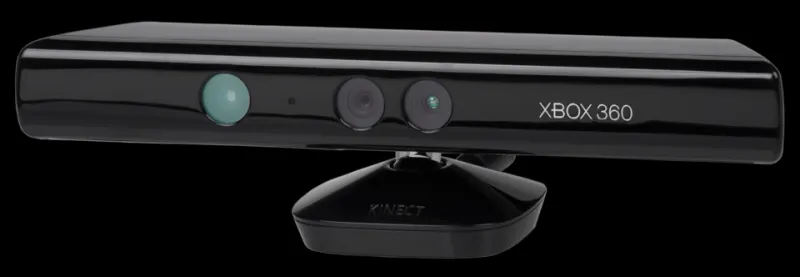
Photo: Evan-Amos, Public domain, via Wikimedia Commons
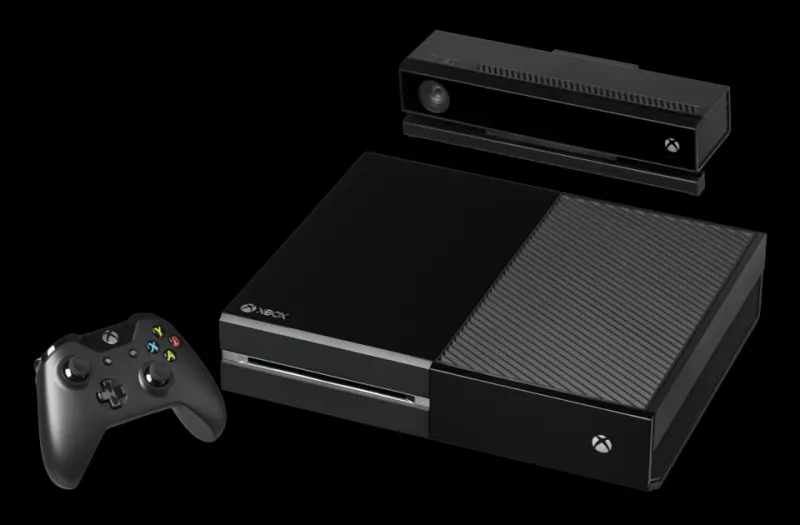
There's a Kinect sensor sitting in a lot of American living rooms right now, probably stuffed behind a cable box or buried in a closet next to a Wii Balance Board and a dusty copy of Dance Central. For most people, it's a punchline — the peripheral that made Xbox One launch consoles $100 more expensive and turned Microsoft into the butt of every "you are the controller" joke on the internet. But spend five minutes talking to the people who are still actually using Kinect in 2024, and you'll walk away wondering whether Microsoft made one of the biggest fumbles in modern gaming history.
Not because the games were secretly great. A lot of them weren't. But because the hardware itself was genuinely extraordinary — and almost nobody in Redmond seemed to realize what they were sitting on.
What the Kinect Actually Was (Beneath the Gimmicks)
Strip away the motion-control fitness games and the voice commands that never quite worked in apartments with loud roommates, and what you had with the Kinect 2.0 was a remarkably sophisticated piece of technology. The second-generation sensor packed an infrared depth camera, a standard RGB camera, and a microphone array capable of tracking up to six people simultaneously. It could read heart rate from skin color changes. It could map a room in three dimensions in real time. For its era — launched in 2013 — that was genuinely impressive stuff.
Researchers at universities across the country figured this out almost immediately. Within a year of the original Kinect's 2010 launch, MIT, Carnegie Mellon, and dozens of other institutions were repurposing the hardware for robotics research, 3D scanning, physical therapy applications, and human-computer interaction studies. Microsoft even released an official SDK for PC, which quietly became a favorite tool in academic and indie development circles. The gaming press barely covered any of it, because Kinect Adventures! was easier to mock.
The Accessibility Angle Nobody Talked About
Here's the part that genuinely stings in retrospect: Kinect had enormous, largely unexplored potential as an accessibility tool — years before Microsoft launched its celebrated Xbox Adaptive Controller in 2018.
For players with limited mobility, a camera-based system that doesn't require precise button presses or joystick control represented something meaningful. Hobbyist developers demonstrated Kinect setups that let users navigate menus with head movements, trigger in-game actions with gestures calibrated to their specific range of motion, or use eye-tracking approximations for players who couldn't use their hands at all. None of this ever made it into a polished Microsoft product. It lived in YouTube demos, GitHub repositories, and disability gaming forums where passionate people were solving problems the industry hadn't officially acknowledged yet.
When Xbox finally committed to accessibility with the Adaptive Controller — and deserves real credit for doing so — it was solving a problem Kinect could have started addressing half a decade earlier. The hardware was there. The will wasn't.
The Streaming and Content Creation Missed Shot
Remember when streaming on Twitch went from niche hobby to mainstream culture? That happened right in the middle of Kinect's lifespan. And here's what's wild: a built-in, high-quality camera and microphone array pointed at the couch where you're gaming is exactly what a generation of new streamers needed. Xbox had that. It was called Kinect.
Instead of leaning into that angle — positioning Kinect as the all-in-one streaming companion for a generation of content creators — Microsoft was busy trying to get people to change TV channels by shouting at their consoles. The pivot never came. By the time streaming was undeniably the future, Kinect was already on life support. The sensor was quietly discontinued in 2017, and the adapter required to plug it into an Xbox One S or Xbox One X cost fifty bucks and was perpetually out of stock.
Independent streamers figured out what Microsoft missed. A small but vocal community of Xbox content creators documented Kinect-based streaming setups that outperformed budget webcams at a fraction of the cost — if you already owned the hardware. It worked. It just never got the marketing push that might have made it matter.
What the Hobbyist Community Built Instead
Walk through any maker space in a major American city and there's a decent chance you'll find a Kinect sensor doing something unexpected. The OpenKinect project has logged thousands of contributors over the years. Artists use depth cameras for interactive installations. Physical therapists use Kinect-based software to track patient movement during recovery. VR developers use them for room-scale tracking experiments. A community of indie game developers never stopped building with the SDK, creating experimental titles that treat gesture and space as genuine design elements rather than gimmicks bolted onto traditional gameplay.
None of this happened because of Microsoft's support. It happened despite Microsoft walking away. The hardware was cheap on the secondhand market, the SDK was functional, and the depth-sensing capability was legitimately useful for anyone willing to learn it. The community found the value that the Xbox marketing department never managed to communicate.
Why It Matters for Xbox's Identity
This isn't just a story about a failed peripheral. It's a story about what happens when a platform holder loses confidence in its own innovation mid-stride. Xbox in the early 2010s was swinging for the fences — trying to build a living room hub that did everything, for everyone. That vision had real problems, including some deeply tone-deaf messaging around always-online requirements and used game restrictions. But buried inside that overreach was a genuine attempt to push gaming somewhere new.
Kinect's abandonment sent a message to the community: Microsoft wasn't going to see that experiment through. It contributed to a broader sense that Xbox was reactive rather than visionary, chasing trends rather than setting them. The company has rebuilt a lot of goodwill since then — Game Pass, the Adaptive Controller, backwards compatibility — but the Kinect era left a scar on the platform's identity that still shows up in conversations about what Xbox stands for.
The Case for a Revival (or at Least an Acknowledgment)
Nobody's seriously expecting Microsoft to announce a Kinect 3 at the next Xbox showcase. But there's a version of this story that ends better than a peripheral graveyard. The technology that made Kinect work — depth sensing, skeletal tracking, spatial audio processing — is now embedded in everything from the Xbox Series X's improved camera support to the broader industry's growing interest in accessibility hardware and mixed reality.
What would help is acknowledgment. Not a PR campaign, but something genuine — maybe official support for the existing SDK community, or documentation that makes it easier for accessibility developers to build on the hardware that's already out there in the wild. The Kinect community kept the flame alive without any help. Imagine what they'd do with a little.
The sensor deserved better than a closet. So did the players it could have served.