From Sega's Ashes: The Unlikely Way Dreamcast's Death Built the Xbox We Know Today
There's a version of gaming history where Sega figures it out. Where the Dreamcast finds its audience, where the online infrastructure holds together, where the third-party support doesn't evaporate overnight. In that timeline, maybe Microsoft never bothers. Maybe Xbox never happens.
But that's not the timeline we got.
Instead, Sega announced on March 31, 2001 that it was done making hardware — forever. And somewhere in Redmond, Washington, a team of engineers and executives who were already deep in console development quietly took notes on everything that went wrong. What followed wasn't just Microsoft filling a vacuum. It was a calculated, almost surgical response to a very public failure — one that shaped Xbox's DNA in ways that still echo today.
The Wound That Opened the Market
To understand what Microsoft inherited, you have to understand just how devastating the Dreamcast's exit was for American gaming culture. This wasn't a console that went quietly. The Dreamcast had a genuinely passionate fanbase — the kind of ride-or-die community that bought peripherals, subscribed to the official magazine, and argued online (via the console's built-in browser, no less) about whether it was the greatest machine ever made.
And then it was gone.
Sega had burned through goodwill with the Saturn's disastrous US launch in 1995, and by the time the Dreamcast arrived in September 1999, the company was already fighting from behind financially. The PlayStation 2's arrival in 2000 — and Sony's aggressive marketing around DVD playback — spooked consumers and retailers alike. Sega couldn't weather the storm. The hardware losses were unsustainable, third-party developers were hedging their bets, and the piracy situation on the platform had become genuinely catastrophic.
When the announcement came, roughly 3 to 4 million Dreamcast owners in the US alone were suddenly holding an orphaned console. That's not a niche audience. That's a real, hungry, underserved gaming community — exactly the kind Microsoft needed to court.
Microsoft Was Already Watching
Here's what's easy to forget: Xbox development had been underway since at least 1999, driven largely by a team that included Seamus Blackley and Kevin Bachus, who had been pitching the concept internally at Microsoft for years. The original pitch was partly built around the idea that PC gaming architecture could translate directly to console hardware — more powerful, more developer-friendly, easier to build for.
But Sega's collapse gave that pitch a new urgency and a new angle. The Dreamcast, for all its commercial failure, had done something genuinely revolutionary: it shipped with a modem, built online functionality into the console experience from day one, and proved there was an appetite for connected gaming on your television. Microsoft, a company whose entire empire was built on networking and operating systems, looked at that and saw a proof of concept.
The original Xbox launched in November 2001 — just eight months after Sega's exit. The timing was not a coincidence. Microsoft knew there was a grieving audience out there, and it knew exactly what that audience had loved about the Dreamcast: the power, the online ambitions, the sense that this was hardware built for serious players.
Xbox Live, which launched in 2002, was essentially the Dreamcast's online dream realized with Microsoft's infrastructure behind it. Sega had the vision. Microsoft had the server capacity and the capital to actually execute it.
The Talent Pipeline Nobody Talks About
One of the most underappreciated parts of this story is the human element — specifically, where Sega's people went after the collapse.
Some of the most talented developers in the industry suddenly found themselves without a hardware home. Several Sega-affiliated studios and key developers ended up in Microsoft's orbit, either directly or through the broader industry reshuffling that followed. Smilebit, Hitmaker, and other Sega internal studios were eventually folded or redirected, and their talent scattered across the industry — some landing at studios that would go on to make games for Xbox.
More directly, certain Sega IPs and the people who built them influenced the early Xbox library in ways that are hard to quantify but easy to feel. The arcade-style energy of early Xbox titles, the emphasis on online multiplayer, the willingness to take swings on genre-defining experiences — that spirit had Dreamcast fingerprints all over it.
Panzer Dragoon Orta, released on Xbox in 2002, is basically a direct line between the two platforms. A beloved Sega franchise, developed by Smilebit, published as an Xbox exclusive. If that's not a symbol of the Dreamcast's soul migrating into Microsoft's machine, nothing is.
What Microsoft Got Right That Sega Got Wrong
The Dreamcast's failure was a masterclass in what not to do, and Microsoft studied it hard. Sega had launched without DVD support at a moment when DVD was becoming the dominant home media format — a decision that cost them dearly with consumers who wanted a multipurpose machine. Xbox launched with a DVD player (via adapter) and a hard drive, positioning itself as the premium, future-proof option.
Sega had struggled to maintain third-party relationships after years of internal drama and platform missteps. Microsoft went out of its way to court developers, offering better tools, better royalty structures, and — critically — hardware that was genuinely easy to build for because it was essentially a PC under the hood. The result was a launch lineup that felt robust and a growing library that kept pace with PlayStation 2 in ways Dreamcast never could against the original PlayStation.
Sega had bet big on online gaming without the financial muscle to back it up long-term. Microsoft had essentially infinite runway and treated Xbox Live as a flagship feature, not an afterthought.
Every lesson was learned. Every mistake was catalogued and corrected.
The Grief That Became Loyalty
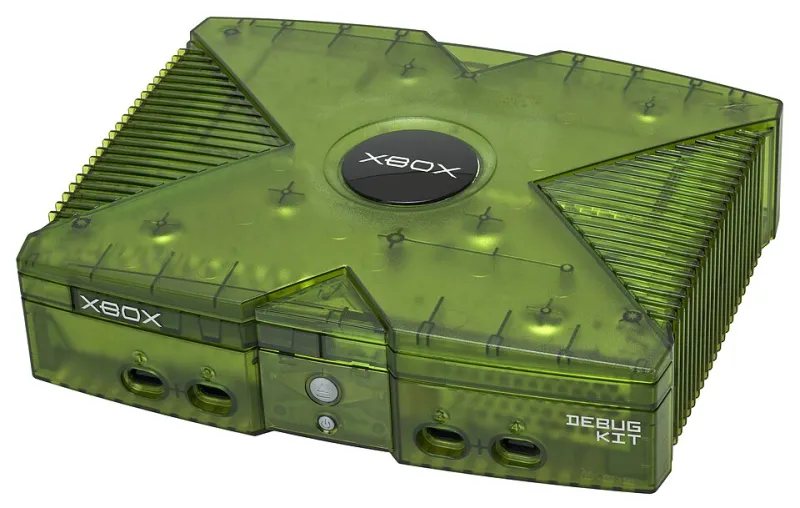
There's something deeply human about what happened in the gaming community between 2001 and 2002. Dreamcast fans were heartbroken — genuinely, irrationally sad about a piece of plastic and silicon the way only gamers can be. And then here came Xbox, this big, heavy, green-accented machine that felt like it was built for people who took gaming seriously.
A lot of Dreamcast refugees found their way to Xbox. Not immediately, and not without skepticism — Microsoft was still a corporate giant trying to buy its way into a culture it didn't fully understand. But the overlap was real. The online focus, the third-party Japanese support (however inconsistent), the sense that this was a platform that respected the hardcore player — it resonated with exactly the people who had loved the Dreamcast most.
In a very real sense, Xbox's early identity was shaped by the community it inherited from Sega's failure. Those players brought expectations, preferences, and a hunger for the kind of gaming experiences that the Dreamcast had promised. Microsoft, to its credit, spent years trying to deliver on those promises.
One Console's Ending, Another's Beginning
The Dreamcast's story is one of gaming's great tragedies. A brilliant machine, ahead of its time, destroyed by a combination of financial pressure, market timing, and decisions that seemed reasonable until they weren't. It deserved better than it got.
But its legacy didn't disappear when Sega stopped making hardware. It scattered — into the industry, into the developers who carried its lessons forward, and into the console that rose to fill the space it left behind. Xbox is, in no small part, a monument to what the Dreamcast tried to be.
Every time you boot up an Xbox and connect to a multiplayer session, you're benefiting from infrastructure that Sega dreamed about and Microsoft built. That's not a comfortable history, exactly. But it's a real one.
And for the gaming community that lived through both — the grief of March 2001 and the cautious optimism of November 2001 — it's a history worth remembering.