Saving What Microsoft Won't: Inside the Xbox Fan Movement Preserving Gaming's Forgotten Era
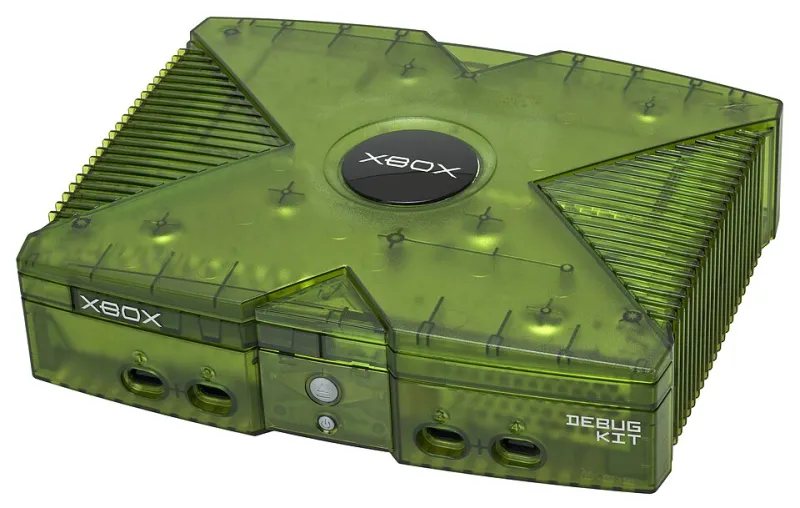
Photo: Evan-Amos, CC BY-SA 3.0, via Wikimedia Commons
Somewhere out there, a guy in Ohio is spending his Saturday afternoon ripping ISOs from original Xbox discs he picked up at a garage sale. He's got a spreadsheet. He's got a NAS drive humming in the corner of his spare bedroom. And he's got a community of a few hundred people on Discord who are doing the exact same thing — cataloging, archiving, and preserving games that Microsoft has either quietly delisted or simply never bothered to rescue from the digital graveyard.
This is the Xbox preservation underground. And it's bigger than most people realize.
The Games Nobody's Selling You Anymore
Let's be honest about something: Microsoft's backward compatibility program is genuinely impressive. The engineering work alone is remarkable, and the fact that you can pop in an original Xbox disc from 2002 and have it run on a Series X is something PlayStation fans still can't fully replicate. Props where props are due.
But backward compatibility isn't the same as preservation. Not even close.
There are hundreds of games — original Xbox titles, Xbox 360 gems, even some Xbox One releases — that never made it into the backward compatibility program and never will. Some are stuck in licensing hell, where the music rights or sports contracts that made them special have long since expired. Others belong to studios that no longer exist, their intellectual property scattered across corporate acquisitions like yard sale leftovers. A few were just never popular enough to justify the legal and engineering overhead of bringing them forward.
Think about games like Futurama: The Game, The Simpsons: Hit & Run (technically a multi-platform title, but beloved by Xbox fans), or the original Outrun 2 — titles where the licensing situation is so tangled that no company is going to untie that knot just to please a few thousand nostalgic players. Those games exist in a weird legal no-man's-land where they're not being sold, not being preserved officially, and not being protected — but also not technically free for anyone to distribute.
So fans are stepping in.
What the Community Is Actually Doing
The preservation community around original Xbox hardware is surprisingly sophisticated. Tools like Xemu — an open-source original Xbox emulator — have matured to the point where a significant chunk of the OG Xbox library runs at full speed on a decent gaming PC. Compatibility lists are maintained obsessively by volunteers. Bug reports get filed, patches get written, and the whole thing moves forward through sheer collective stubbornness.
Over on the hardware side, modded original Xbox consoles running custom dashboards like UnleashX or XBMC (yes, the software that eventually became Kodi started life as an Xbox Media Center project) are still being maintained and treasured. Communities on Reddit and dedicated forums swap tips on recapping aging motherboards, replacing failing clock capacitor batteries, and soft-modding consoles using nothing more than a save file exploit and a copy of Splinter Cell.
This isn't piracy culture in the way most people imagine it. Ask anyone deep in these communities and they'll tell you the same thing: most of them own physical copies of the games they're archiving. They're not trying to steal anything. They're trying to make sure that when the last disc drive dies and the last cartridge crumbles, someone still has a record that these games existed — and that people can actually play them.
The Tension Nobody Wants to Talk About
Here's where it gets complicated, and where the Xbox community specifically finds itself in an awkward spot.
Microsoft has been louder than almost any other platform holder about its commitment to gaming history. Phil Spencer has talked openly about preservation being important. The backward compatibility team has done real work. Game Pass has surfaced older titles that many players had completely forgotten about. The rhetoric is genuinely good.
But rhetoric and action aren't always the same thing. The backward compatibility program stopped adding new titles in 2022, citing licensing complexity as the primary obstacle. That's an honest answer, but it's also a ceiling — and a lot of beloved games are stuck below it.
For fans who grew up with the original Xbox or spent formative years on the 360, watching certain titles disappear from digital storefronts without any path to legitimate access feels like a betrayal of that preservation promise. When the 360 marketplace started winding down and certain titles vanished with no fanfare, the message — however unintentional — was clear: if you didn't buy it then, you're out of luck now.
That's the gap the preservation community is filling. And it's a gap Microsoft created, even if not entirely by choice.
Fair Use, Fan Love, and the Legal Gray Zone
Nobody in this piece is going to tell you that ripping and distributing copyrighted game files is legally clean — it isn't, regardless of your intentions or whether you own the physical disc. The legal framework around software preservation is genuinely murky, and the Library of Congress exemptions that allow some preservation activities are narrower than most people think.
But there's a moral argument that runs parallel to the legal one, and the gaming community has been making it loudly for years: if a company isn't selling a product, isn't preserving it, and has no plans to do either, does it have a legitimate claim to control who experiences it?
The video game industry has largely avoided directly answering that question. Organizations like the Video Game History Foundation have pushed for broader exemptions, argued in front of Congress, and made compelling cases for why games deserve the same preservation consideration as films or books. Progress has been slow.
In the meantime, fans are voting with their hard drives.
What Microsoft Could Actually Do
This isn't a call for Microsoft to abandon copyright law or open-source its entire back catalog. That's not realistic. But there are things that could genuinely help.
A formal digital preservation partnership with institutions like the Strong National Museum of Play — which already maintains significant game archives — could give legal cover for preservation efforts that currently exist in gray zones. Clearer communication about which titles will never be backward compatible, and why, would at least let fans know where the gaps are. And an official stance on personal archiving of owned physical media would go a long way toward building trust with a community that already feels like it's doing Microsoft's preservation job for free.
The Xbox faithful aren't trying to undermine the platform. If anything, they're its most devoted custodians. They're the ones staying up late to make sure Jet Set Radio Future still runs smoothly on modern hardware. They're the ones who remember that the original Xbox had a genuinely remarkable library that deserves better than slow death by disc rot.
Microsoft has the resources to do more. The question is whether gaming history is worth the effort — or whether fans will just keep building their own vaults while the company watches from the sidelines.