When Microsoft Won't Save It, Fans Will: Inside the Underground War to Keep Xbox's Library Alive
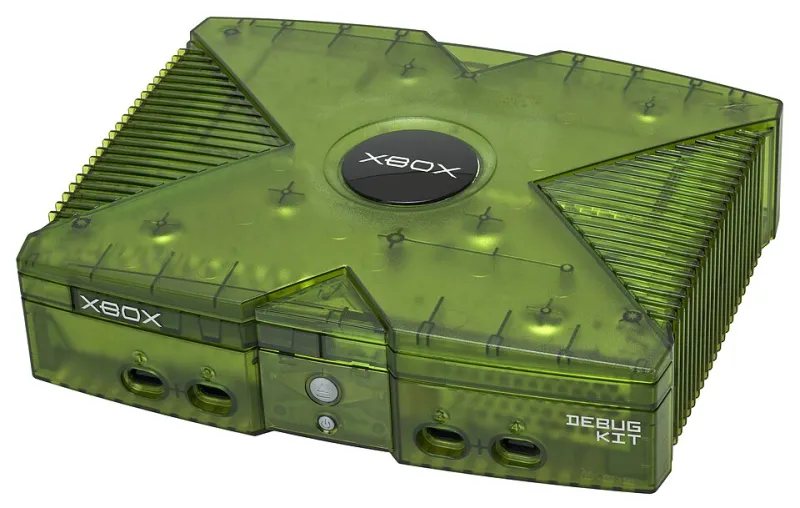
Photo: Florian Müller, GPLv3, via Wikimedia Commons
Let's be honest with each other for a second. Microsoft's backwards compatibility program is genuinely impressive. The engineering team has pulled off things that most people thought were technically impossible — running original Xbox and Xbox 360 titles on modern hardware with improved resolution, stable frame rates, and HDR support. For a company that once seemed completely indifferent to its own gaming history, that's a real turnaround worth acknowledging.
But here's the thing: the official library covers maybe 600 original Xbox and Xbox 360 titles combined. The original Xbox alone launched with hundreds of games across its lifespan. The 360 library? We're talking over 2,000 titles. You don't have to be a mathematician to see the gap. And sitting inside that gap is an enormous chunk of gaming history that Microsoft has quietly decided isn't worth the licensing headache — or simply hasn't gotten around to yet.
That's where the basement engineers come in.
The People Keeping the Lights On
Scattered across forums, Discord servers, and subreddits that most casual gamers have never heard of, there's a thriving community of hobbyists, collectors, and flat-out obsessives who have spent years building and refining emulation tools specifically for Xbox hardware. Projects like XEMU — an open-source original Xbox emulator — have quietly matured into genuinely capable pieces of software. We're not talking about the janky, crash-every-twenty-minutes emulators of the early 2000s. These tools are stable, actively developed, and in some cases produce results that rival what you'd get from original hardware.
XEMU, for instance, has reached a point where a significant portion of the original Xbox library runs at full speed with solid compatibility. Developers contribute code on GitHub, users submit bug reports, and the whole thing hums along like a small open-source software company — except nobody's getting paid and everyone's doing it purely because they love these games.
On the Xbox 360 side, things get more complicated. The 360's architecture was notoriously tricky, which is part of why even Microsoft's own backwards compatibility work took years to scale up. But emulation projects targeting 360 hardware have made real strides, and the community behind them is relentlessly determined.
The Legal Tightrope
Now, let's not pretend there isn't a massive legal elephant in the room. Emulation itself occupies a famously murky corner of US copyright law. The software — the emulator — is generally considered legal to develop and distribute. It's the ROMs, the actual game files, where things get complicated fast.
The community's position is nuanced, and most serious participants will tell you the same thing: they own the physical media, they dump their own copies, and they're preserving games that aren't commercially available anywhere. That argument has genuine moral weight. When a game isn't on Game Pass, isn't available for digital purchase, and hasn't been re-released in any form, what exactly is a collector supposed to do? Let it rot?
The legal reality is messier than the moral argument, of course. Publishers and rights holders have every legal right to pursue ROM distribution, and some have. But enforcement is inconsistent, and the preservation community has largely learned to operate carefully — hosting emulators without ROM files, pointing users toward their own physical collections, and keeping the conversation focused on the tools rather than the content.
Microsoft, for its part, has been relatively quiet about the emulation scene compared to some other platform holders. Whether that's tacit tolerance or simply a bandwidth issue is hard to say.
What Microsoft Gets Right — And Where It Falls Short
To be fair to the green team, the backwards compatibility program isn't just about flipping a switch. Licensing is genuinely complicated. When a 2003 Xbox game featured a licensed soundtrack, clearing that music for a modern digital re-release involves lawyers, rights holders, and negotiations that can drag on for years or collapse entirely. Some games will never come back through official channels for exactly that reason.
There's also the matter of prioritization. Microsoft has been transparent that they focus backwards compatibility resources on titles with the most demand. That makes business sense. It also means deep-cut cult favorites — the weird action games, the budget sports titles, the licensed movie tie-ins that somehow turned out great — are perpetually at the back of the line.
And that's precisely the territory where the fan community absolutely dominates. Nobody is waiting for corporate sign-off. Nobody is negotiating music rights. If a game runs in XEMU, it runs — full stop. The community has catalogued compatibility ratings, shared configuration guides, and built up a knowledge base that makes getting obscure original Xbox titles running genuinely accessible to people who aren't hardcore tech enthusiasts.
The Collector Mentality Meets the Digital Age
There's something deeply American about this whole scene, in the best possible way. It's the garage tinkerer spirit applied to gaming history — a refusal to accept that something worth saving should just disappear because it's inconvenient to preserve. The people doing this work aren't pirates in any meaningful sense of the word. They're archivists who happen to work outside institutional frameworks.
Talk to anyone deep in the Xbox preservation community and a few themes come up constantly. The fear that physical media will eventually become unplayable. The frustration that digital storefronts can vanish overnight, taking entire libraries with them. The recognition that gaming history is genuinely at risk of being lost, and that nobody with real resources seems to be treating it with the urgency it deserves.
The Internet Archive has done some of this work on a broader scale, and organizations like the Video Game History Foundation have been sounding the alarm publicly. But for Xbox-specific preservation, the community itself is carrying most of the weight.
What This All Means
Here's the uncomfortable truth that the emulation community's existence surfaces: corporate backwards compatibility, as good as Microsoft's has gotten, is ultimately a product decision, not a preservation mission. Titles get added based on licensing viability, engineering resources, and user demand metrics. History gets saved when it's also profitable to save it.
The fan community operates on a completely different logic. They're preserving things because those things matter — because someone, somewhere, has a memory attached to a game that otherwise has no future. That's a fundamentally different value system, and it produces fundamentally different results.
Microsoft deserves genuine credit for going further than most platform holders on backwards compatibility. But the gap between what they've done and what the full Xbox library represents is enormous, and the people filling that gap in their spare time deserve recognition too.
The emulation community isn't the enemy of official preservation. In a lot of ways, they're the proof of concept — the demonstration that these games are worth saving, that the demand exists, and that where there's a will, there's always someone who'll find a way. Microsoft would do well to pay attention to what fans are building in their basements. Because right now, the basement is winning.