Drop a Quarter, Hit Play: Why Game Pass Is the Arcade of Our Generation
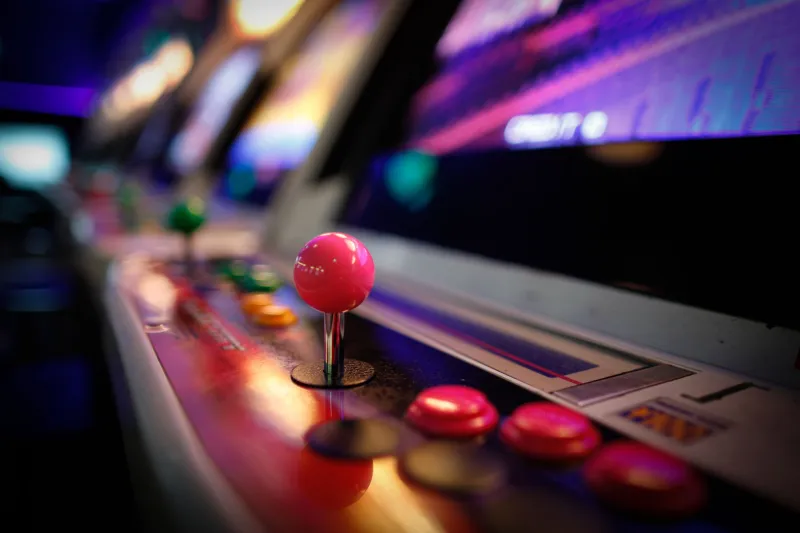
Remember the feeling? You walk into a dimly lit arcade, pockets heavy with quarters, and the whole room hums with possibility. You're not committed to anything. You're just... exploring. Maybe you dump a couple coins into something you've never heard of, get hooked for twenty minutes, then drift over to something else entirely. Nobody's judging you. Nobody's keeping score of what you should be playing. It's pure, unfiltered gaming instinct.
That feeling largely disappeared when arcades did. Home consoles demanded commitment—sixty bucks a pop, boxed up and purchased with the kind of intention that made abandoning a game feel like a personal failure. For decades, we lost that casual, exploratory relationship with gaming.
Then Game Pass showed up and quietly gave it back to us.
The Quarter-Slot Model, Reimagined
Here's the thing about arcades that people tend to romanticize without fully articulating: it wasn't just the games. It was the access model. You paid a small amount, you got to play, and if the game wasn't clicking, you moved on. No sunk-cost guilt. No shelf of shame staring at you from across the room.
Game Pass operates on the same psychological principle. For a flat monthly fee, you get a rotating library of titles that spans indie darlings, AAA blockbusters, and genuine hidden gems. You can spend three hours in a game you'd never have bought at full price, decide it's not for you, and pivot to something else without losing a dollar more than you already spent. That's the arcade bargain, translated into the streaming age.
The rotating library part matters too. Arcades didn't keep every cabinet forever. Games came and went. New machines showed up and created buzz. Classics stuck around until they didn't. Game Pass does the same dance—titles cycle in with fanfare and cycle out quietly, creating a sense of urgency and discovery that a static library never could. When something lands on Game Pass, there's a communal moment. People rush in together, talk about it, and move on when the next thing arrives. That's arcade culture, right down to the shared experience.
The Hidden Gem Economy
Ask any serious arcade veteran about their favorite memories and they'll almost never name the obvious stuff. It's never just Pac-Man or Donkey Kong. It's the weird side-scroller in the corner that nobody else was playing. The rail shooter that had no right being as good as it was. The obscure fighter that somehow had the best soundtrack in the building.
Game Pass has built an entire ecosystem around that exact phenomenon. The service has become arguably the best curator of overlooked games in the industry right now. Titles like Pentiment, Pikuniku, A Short Hike, and Outer Wilds found massive audiences through Game Pass that they almost certainly wouldn't have reached through traditional retail. Players stumbled into them the same way arcade kids stumbled into hidden gems—by wandering, by being bored enough to try something unfamiliar, by having nothing to lose.
This is genuinely new behavior that Game Pass has normalized. The old model rewarded research and deliberate purchasing. Game Pass rewards curiosity. You don't need to read a review before you try something. You just hit play and see what happens. That's a cultural shift that doesn't get talked about nearly enough.
Ownership Is the Wrong Conversation
The loudest criticism of Game Pass—and subscription gaming in general—is the ownership argument. You don't own anything. When a game leaves the service, it's gone. Your library isn't really yours.
But here's the thing: you didn't own those arcade experiences either. Nobody walked out of a Pizza Hut arcade in 1988 with a deed to their Galaga high score. The experience was the point. The memory was the souvenir. And somehow, those memories are among the most cherished in all of gaming history.
Game Pass is forcing a similar philosophical reckoning. The players who've embraced it have largely stopped thinking about their library as a collection and started thinking about it as a stream of experiences. That's uncomfortable for a generation raised on physical media and ownership culture—but it's also more honest about what gaming actually is. You're not buying a game. You're buying access to a feeling, a few hours, a story. Game Pass just makes that transaction explicit.
The nostalgia angle cuts both ways here too. Yes, there's something bittersweet about a game leaving Game Pass. But that same bittersweet feeling is exactly what arcade veterans feel when they talk about cabinets that disappeared without warning. The impermanence is part of the culture, not a flaw in it.
The Social Layer Nobody's Crediting
Arcades were social spaces before "social" became a tech buzzword. You played next to strangers, watched over shoulders, competed for high scores on a public leaderboard. The community formed organically around shared access to the same machines.
Game Pass has rebuilt a version of that social layer in the digital space. Because so many players have access to the same rotating library simultaneously, there's a shared cultural vocabulary that didn't exist when everyone was playing different purchased titles. When a game drops on Game Pass, the discourse explodes in real time. Reddit threads, Discord servers, YouTube impressions—it all happens at once, because everyone can just jump in.
That communal discovery moment is the closest modern gaming gets to gathering around an arcade cabinet. It's not identical, obviously. The physical presence is gone. But the feeling of everyone experiencing the same thing at the same time? That's arcade culture running on a server farm.
The Machine Keeps Evolving
Arcades didn't die because the games got worse. They died because home hardware eventually caught up and the access model stopped making sense for most players. The question for Game Pass is whether it can keep evolving faster than the arguments against it.
So far, the signs are encouraging. The service has gotten more aggressive about day-one releases, more intentional about surfacing overlooked catalog titles, and more creative about how it bundles value through EA Play integration and cloud gaming. It's not a static product. It's a living, breathing thing that responds to how people actually play—which is, again, exactly what the best arcades did.
Will Game Pass eventually face its own version of the arcade collapse? Maybe. Nothing lasts forever, and the economics of subscription gaming are still being stress-tested in real time. But right now, in this moment, it's doing something genuinely remarkable: it's made gaming feel exploratory again. Casual again. Fun in the way that dropping a quarter into an unknown cabinet was fun.
And for anyone who grew up in the glow of an arcade screen, that's not a small thing. That's everything.